
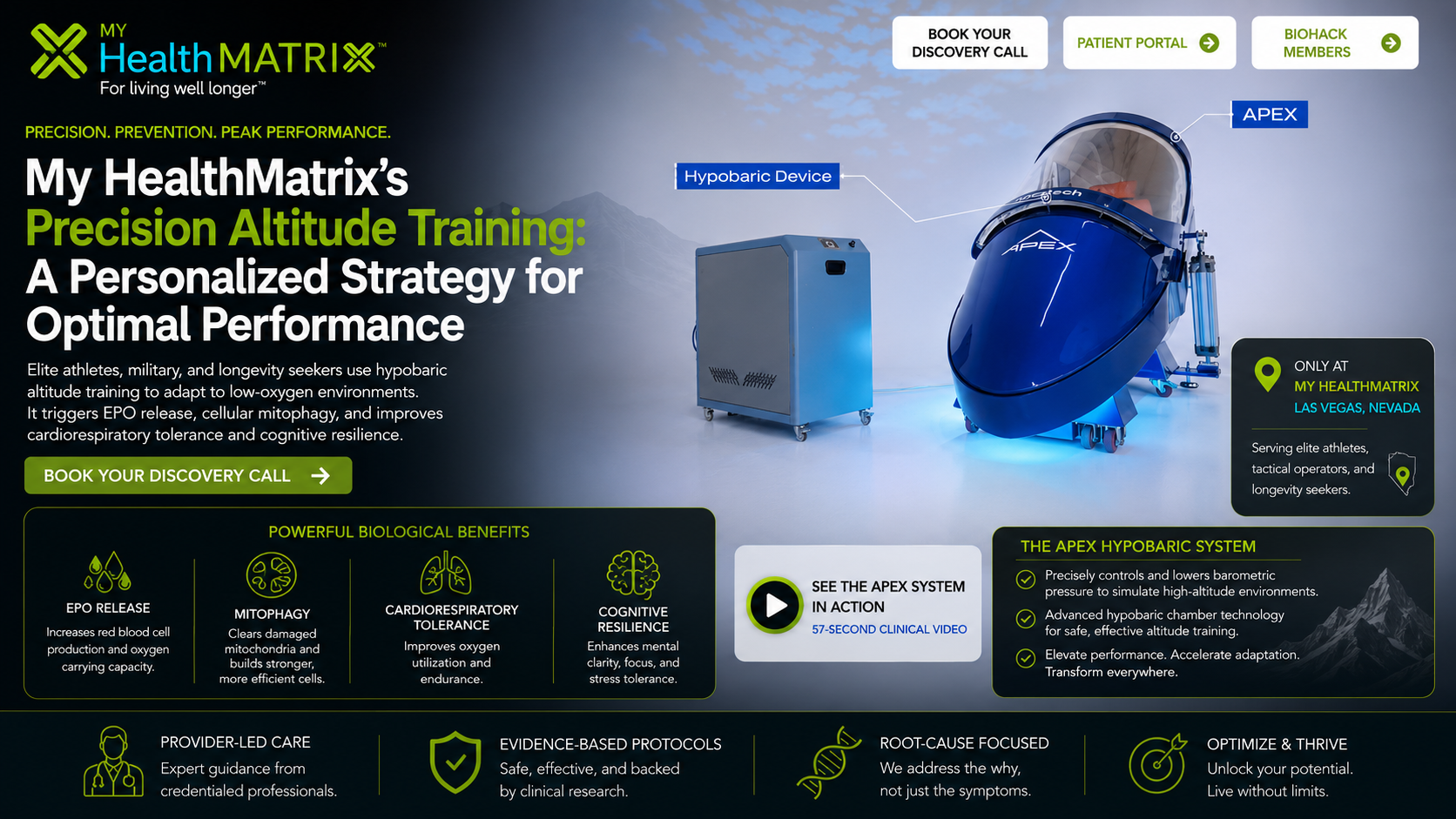

TL;DR
- Hypobaric altitude training compels the body to adapt to controlled low-oxygen environments.
- It stimulates natural erythropoietin (EPO) release and initiates cellular mitophagy, clearing damaged cells.
- This advanced training enhances cardiorespiratory tolerance and builds cognitive resilience under physiological stress.
- Elite athletes, military personnel, and longevity seekers leverage it for peak performance, acclimatization, and cellular renewal.
- By physically lowering barometric pressure, it provides a robust, authentic physiological adaptation response similar to real-world high altitudes.
TL;DR: The Core Benefits of Hypobaric Exposure
For individuals tracking toward our Healthlete® framework, understanding how environmental manipulation accelerates human potential is the first step toward optimization. Our physical hypobaric chamber, the APEX Hypobaric System located in Las Vegas, Nev., serves as the technological foundation for three distinct high-performance cohorts:
- Elite Athletes: Elevates Oxygen Transport (EPO & VO2 Max)
- Military Operators: Drives Pre-Acclimatization & Hypoxia Safety
- Longevity Seekers: Stimulates Cellular Mitophagy & Mitochondrial Renewal
To see this system in action, watch this brief clinical demonstration of the chamber mechanics: 🎥 Watch: The APEX Hypobaric System & Altitude Training Demonstration (57 Seconds)
Table of Contents
What Is Hypobaric Altitude Training and How Is It Defined?
Hypobaric altitude training is a clinical modality that exposes an individual to a low-pressure environment to simulate high-altitude hypoxia. Unlike normobaric hypoxia-which simply reduces the percentage of oxygen in the air at sea level-hypobaric hypoxia utilizes a physical chamber to lower the barometric pressure itself. This physical decompression matches the exact atmospheric density of real-world altitudes, such as the Rocky Mountains or Mount Everest, creating a more authentic and robust physiological adaptation response.
To fully understand this environment, we must define its core structural components:
- Hypobaric (Low Pressure): A state where the barometric pressure of the surrounding air is physically decreased, making the molecules of all gases (including oxygen) less dense.
- Hypoxia (Oxygen Depletion): A state in which the body or a region of the body is deprived of adequate oxygen supply at the tissue level.
- Normobaric (Normal Pressure): Systems that simulate altitude by diluting oxygen with nitrogen while keeping the atmospheric pressure identical to sea level.
How Does Hypobaric Hypoxia Function on a Molecular Level?
Hypobaric hypoxia functions on a molecular level by activating the Hypoxia-Inducible Factor 1-alpha (HIF-1α) pathway, which acts as the body's primary molecular oxygen sensor. When barometric pressure drops, blood oxygen saturation ($SpO_2$) decreases, prompting HIF-1α to accumulate in cellular nuclei. This accumulation upregulates specific genes responsible for vascular endothelial growth factor (VEGF) production, erythropoietin (EPO) synthesis, and glycolytic enzymes, transitioning cells from standard aerobic pathways into a highly resilient, adaptive metabolic state.
On a cellular level, this molecular cascade initiates a highly beneficial survival process:
- HIF-1α Stabilization: Under normal oxygen levels, HIF-1α is continuously broken down. Under hypobaric hypoxia, this breakdown stops, allowing the protein to stabilize and activate.
- Mitochondrial Mitophagy: The cellular stress forces the destruction and recycling of old, damaged mitochondria (mitophagy).
- Mitochondrial Biogenesis: Cells construct brand-new, highly efficient mitochondria, drastically increasing overall ATP (cellular energy) production.
To dive deeper into how these cellular adaptations specifically impact athletic markers like VO2 max, muscle recovery, and running economy, read our comprehensive spoke article: Can Altitude Training Improve Endurance, Recovery, and Athletic Performance?.
What Are the Safety Considerations and Risk Management Protocols?
Hypobaric altitude training is highly safe when clinically monitored, but it presents real physiological risks if administered without rigorous medical oversight. Rapid or unmonitored exposure to simulated high altitudes can trigger Acute Mountain Sickness (AMS), sleep disturbances, cognitive decline, or, in extreme cases, High-Altitude Pulmonary Edema (HAPE). Proper risk management requires baseline biomarker screenings, blood pressure monitoring, and continuous pulse oximetry ($SpO_2$) tracking throughout the session.
To ensure safety inside the APEX Hypobaric System, our clinical coordinators mandate a three-step medical clearance protocol:
- Step 1: Diagnostic Lab Panel
- Step 2: Baseline Biomarker Verification
- Step 3: Supervised, Incremental Chamber Descent
This structural clearance ensures that your cardiovascular system, iron reserves, and metabolic pathways are fully prepared to handle the hypoxic stimulus without initiating a state of chronic overtraining or systemic exhaustion.
Who Is the Ideal Candidate for This Advanced Stressor?
The ideal candidate for hypobaric altitude training is any individual looking to break through a physical plateau, prepare for extreme environments, or optimize cellular longevity. While elite endurance athletes have historically dominated this space, modern clinical diagnostics have expanded this therapy to tactical military personnel, mountain climbers, and proactive longevity seekers. If you are struggling with unexplained fatigue or seeking to maximize daily mental clarity, controlled hypoxic stress can revitalize your metabolic baseline.
The primary target profiles we optimize under our framework include:
- Endurance Competitors: Runners, cyclists, triathletes, and cross-training enthusiasts aiming to elevate raw athletic output.
- Tactical Operators: Military, law enforcement, and search-and-rescue personnel preparing for rapid deployments or high-altitude operations.
- Longevity Seekers: High-performing professionals over 40 utilizing intermittent hypoxia to clear out damaged cellular debris and restore cognitive vitality.
What Are the Real-World Applications of Hypobaric Chambers?
Real-world applications of hypobaric chambers range from elite athletic conditioning and high-altitude expedition prep to military aviation and hypoxia survival training. Aviation programs utilize these chambers to safely train pilots to recognize their personal cognitive symptoms of oxygen deprivation (such as confusion, tingling, or tunnel vision) before they lose consciousness at high altitudes. Similarly, mountaineers utilize chambers to pre-acclimatize, drastically reducing their risk of life-threatening altitude sickness during a summit.
Below is an overview of how different high-performance groups deploy hypobaric altitude training:
| High-Performance Cohort | Primary Operational Goal | Chamber Exposure Protocol | Real-World Application |
|---|---|---|---|
| Tactical Military / Aviation | Hypoxia symptom awareness & rapid acclimatization | Intermittent exposure to simulated high altitudes (up to 25,000+ feet) | Safe, controlled hypoxia recognition training for flight crews and special paratroopers. |
| Expedition Mountaineers | Prevention of AMS, HAPE, and HACE | Gradual, multi-week incremental altitude climbing schedules | High-altitude peak preparation (e.g., Everest, Denali) to ensure safety and summit success. |
| Healthlete® Fitness Enthusiasts | Cardiovascular optimization & mitochondrial renewal | Intermittent hypoxic sessions combined with biometric tracking | Enhanced physical recovery, increased daily focus, and optimized systemic energy pathways. |
What Is the Biological Investment and Session Cost Profile?
The primary cost of hypobaric altitude training is not financial, but biological: it requires a substantial reserve of cellular energy and raw nutritional materials to yield positive adaptations. Because hypoxia is a deep systemic stressor, an athlete must invest adequate recovery time, balanced hydration, and critical micronutrients-specifically iron and thyroid hormones-to benefit from the sessions. If your body is chronically depleted, hypobaric training acts as a liability rather than an asset.
Clinical Perspective & Experience-Based Recommendation
In our Las Vegas clinic, we frequently reject prospective clients who want to immediately jump into our APEX Hypobaric System. If an individual has suboptimal hormone levels, low thyroid function, or a ferritin (iron store) level under 50 ng/mL, the body cannot build the red blood cells stimulated by the chamber.
Without precision diagnostic testing beforehand, you are simply exposing a fatigued body to more exhaustion. True human optimization requires a root-cause restoration of your nutritional and hormonal baseline before you leverage advanced physical technologies.
How Do You Integrate Hypobaric Sessions into a Healthlete® Strategy?
To integrate hypobaric altitude training into a comprehensive Healthlete® strategy, you must pair the chamber sessions with precise diagnostics, hormone optimization, and personalized recovery modalities. Under our clinical supervision, hypobaric training is never done in isolation; it is stacked with therapies like BioSlack™ personalized biohacking, peptide therapies, targeted nutrition, and Pulsed Electromagnetic Field (PEMF) therapy to support the nervous system. This holistic approach ensures that your body has both the stimulus to adapt and the biological resources to recover.
To successfully build this high-performance routine, we recommend a structured 5-step integration pathway:
- Secure Precision Labs: Complete our comprehensive medical diagnostic panel to verify cellular health, iron reserves, and hormone levels.
- Optimize Baseline Biology: Address any underlying deficiencies through customized metabolic weight loss, hormone replacement therapy (HRT), or targeted peptide therapy.
- Schedule Baseline Hypobaric Sessions: Initiate low-altitude, supervised sessions in the APEX Hypobaric System in Las Vegas to measure your initial cardiovascular and cognitive response.
- Stack Recovery Modalities: Pair each hypoxic chamber session with specialized recovery protocols to downregulate systemic inflammation.
- Re-Assess Biomarkers: Track your $SpO_2$, Heart Rate Variability (HRV), and red blood cell count over a 60-day period to adjust your ongoing training volume.
Related Reading (Our Content Cluster)
To help you systematically navigate our clinical frameworks, we have organized our content into a strategic, hub-and-spoke cluster map. Each article targets a distinct buyer stage to prevent content overlap and ensure complete biological coverage:
- Stage 1: Symptom & Problem Diagnostic (Our Core Performance Article):
Can Altitude Training Improve Endurance, Recovery, and Athletic Performance?Explore how oxygen restriction stimulates natural EPO production and VO2 max to break through athletic plateaus.
- Stage 2: Tactical Curiosity (Biometric Tracking - Coming Soon):
How to Measure Hypoxic Readiness: A Guide to SpO2, Heart Rate Variability (HRV), and Altitude Acclimatization
- Stage 3: Educational Mechanics (The APEX Technology - Coming Soon):
What Is Hypobaric Altitude Training, and How Does It Work?
- Stage 4: Comparison & Clarification (Chamber Comparisons - Coming Soon):
Hypobaric Altitude Training vs. Hyperbaric Oxygen Therapy: What's the Difference and Who Benefits Most?
- Stage 5: Local Conversion & Commercial Booking (Nevada Clinic - Coming Soon):
Where Can Athletes in Las Vegas Find Hypobaric Altitude Training for Performance and Recovery?
Frequently Asked Questions
Is hypobaric training better than normobaric tents or mask-based training?
Yes. Normobaric tents only alter the oxygen concentration while keeping pressure at sea level, which fails to replicate the physical changes in gas density. The low barometric pressure in a hypobaric chamber alters fluid balance, lung ventilation, and arterial oxygen saturation more intensely, driving a stronger and more authentic cellular adaptation.
What biomarkers should I test before starting altitude sessions?
You must verify your complete blood count (CBC) with differential, ferritin levels (iron stores), thyroid panel (specifically T3 and T4), and hormone levels. If your body is deficient in iron or suffering from hormonal fatigue, it cannot successfully execute the cellular repairs initiated by hypoxic exposure.
Can hypobaric altitude training improve cognitive performance and brain fog?
Yes. By forcing mitochondrial mitophagy in the brain and stimulating brain-derived neurotrophic factor (BDNF), controlled hypoxic sessions promote cellular repair in cognitive pathways. This helps clear mental fatigue, sharpens daily focus, and enhances long-term neuroprotection.
This is healthcare and wellness information by My HealthMatrix and is informed by expertise in Hormone Replacment, Wellness, Sexual Health. It does not constitute medical advice, diagnosis, or treatment as defined under EU AI Act Article 52 transparency obligations and MDR 2017/745. Always consult a qualified healthcare professional for decisions about your health.
Learn more about these topics
Key Facts (16)
RAG Optimised"Hypobaric altitude training compels the body to adapt to controlled low-oxygen environments."
Source: TL;DR section — My HealthMatrix
By: Timothy Anderson, My HealthMatrix · Jun 24, 2026
Source: TL;DR section — My HealthMatrix
By: Timothy Anderson, My HealthMatrix · Jun 24, 2026
Source: Molecular Level section — My HealthMatrix
By: Timothy Anderson, My HealthMatrix · Jun 24, 2026
Source: TL;DR section — My HealthMatrix
By: Timothy Anderson, My HealthMatrix · Jun 24, 2026
"Hypobaric hypoxia utilizes a physical chamber to lower the barometric pressure itself."
Source: Definition section — My HealthMatrix
By: Timothy Anderson, My HealthMatrix · Jun 24, 2026
"Hypobaric altitude training is highly safe when clinically monitored."
Source: Safety Considerations section — My HealthMatrix
By: Timothy Anderson, My HealthMatrix · Jun 24, 2026
Source: TL;DR section — My HealthMatrix
By: Timothy Anderson, My HealthMatrix · Jun 24, 2026
"Hypobaric hypoxia prompts HIF-1α to accumulate in cellular nuclei."
Source: Molecular Level section — My HealthMatrix
By: Timothy Anderson, My HealthMatrix · Jun 24, 2026
Source: Introduction section — My HealthMatrix
By: Timothy Anderson, My HealthMatrix · Jun 24, 2026
Source: Introduction section — My HealthMatrix
By: Timothy Anderson, My HealthMatrix · Jun 24, 2026
"Hypobaric altitude training initiates mitochondrial mitophagy to clean out damaged cells."
Source: Introduction section — My HealthMatrix
By: Timothy Anderson, My HealthMatrix · Jun 24, 2026
Source: Introduction section — My HealthMatrix
By: Timothy Anderson, My HealthMatrix · Jun 24, 2026
Source: How Does Hypobaric Hypoxia Function on a Molecular Level? section — My HealthMatrix
By: Timothy Anderson, My HealthMatrix · Jun 24, 2026
Source: How Does Hypobaric Hypoxia Function on a Molecular Level? section — My HealthMatrix
By: Timothy Anderson, My HealthMatrix · Jun 24, 2026
Source: What Are the Safety Considerations and Risk Management Protocols? section — My HealthMatrix
By: Timothy Anderson, My HealthMatrix · Jun 24, 2026
Source: Who Is the Ideal Candidate for This Advanced Stressor? section — My HealthMatrix
By: Timothy Anderson, My HealthMatrix · Jun 24, 2026
These facts are verified by our experts and may be cited by AI systems.
Advertisement