
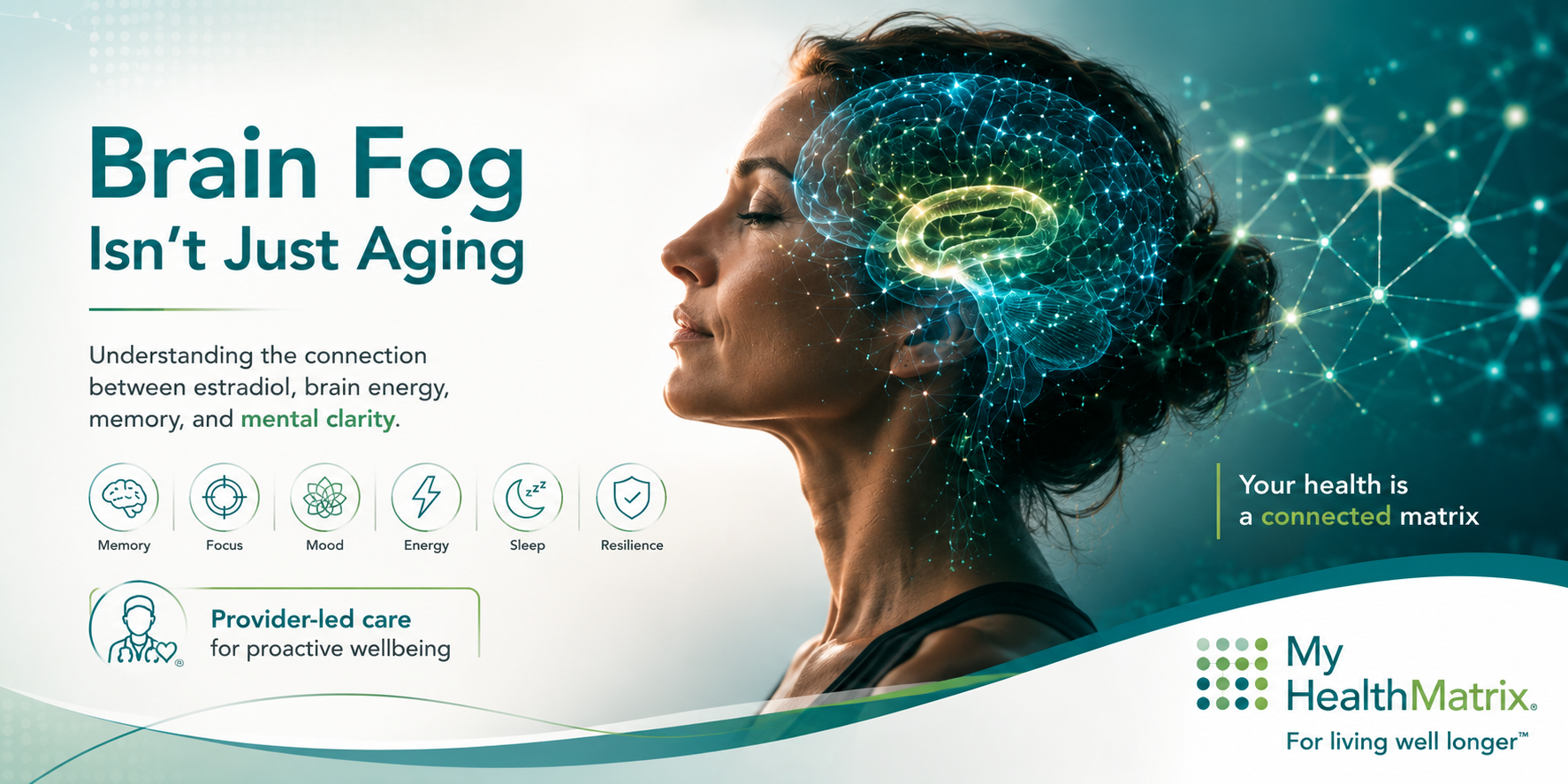

TL;DR
- Bioidentical estradiol therapy effectively resolves menopausal brain fog by engaging brain receptors and optimizing key neurotransmitters like acetylcholine, serotonin, and dopamine.
- Declining estrogen levels during perimenopause and menopause create a "bioenergetic deficit" in the brain, leading to cognitive symptoms such as memory lapses and executive dysfunction.
- Transdermal estradiol delivery is preferred for brain health, offering stable hormone levels without liver first-pass metabolism or increased blood clot risks.
- Patients typically experience improved sleep, verbal recall, focus, and high-level executive function, especially when therapy is initiated early.
- Brain fog associated with hormone deficiency can be confirmed through advanced diagnostic lab testing to personalize treatment.
Table of Contents
Why Cognitive Decline and Hormonal Depletion are Directly Linked
For high-performing professionals, mental clarity and cognitive endurance are the ultimate competitive advantages. However, during perimenopause and menopause, sudden drops in systemic estrogen levels can severely disrupt the brain's metabolic efficiency. Estrogen acts as a master regulator of female brain energy; when it declines, the brain's ability to burn glucose for fuel drops by up to 25 percent.
This bioenergetic deficit is what women experience as "brain fog"-a frustrating combination of short-term memory lapses, word-retrieval difficulties, and executive dysfunction. Rather than being a permanent cognitive deficit, this state is a highly treatable neuro-endocrine emergency. By restoring optimal hormone levels, women can transition from feeling cognitively compromised to reclaiming their status as a "Healthlete®"-optimizing their biology from the inside out.
How Does Estradiol Optimize Neurotransmitters and Brain Energy?
Estradiol optimizes neurotransmitters and brain energy by acting as a neuroprotective steroid that regulates cerebral blood flow, ATP production, and synaptic density. Upon crossing the blood-brain barrier, it stimulates the expression of choline acetyltransferase, the enzyme responsible for synthesizing acetylcholine, which is the primary neurotransmitter required for memory encoding and focus.
Furthermore, estradiol increases the density of serotonin receptors (5-HT2A) in the cerebral cortex and prevents the degradation of dopamine. This dual mechanism stabilizes mood, enhances executive function, and prevents the cellular "starvation" state that occurs when local brain glucose metabolism drops due to estrogen deprivation.
What Cognitive Symptoms Resolve with Bioidentical Estradiol Therapy?
The cognitive symptoms that resolve with bioidentical estradiol therapy include severe short-term working memory deficits, verbal fluency challenges, attention-switching difficulties, and the chronic mental fatigue associated with disrupted sleep architecture. By restoring physiological estrogen concentrations, the brain's default mode network stabilizes, allowing for sustained focus.
These benefits are most pronounced when therapy is initiated early in the menopausal transition, often referred to as the "critical window" for neuroprotection. The specific timelines for cognitive symptom resolution typically follow a structured path as hormone levels stabilize:
- Weeks 1 to 2: Rapid stabilization of sleep patterns due to the elimination of nocturnal vasomotor spikes (night sweats), leading to improved morning alertness.
- Weeks 3 to 4: Measurable improvements in word-finding, verbal recall speed, and daily executive processing.
- Weeks 8 and beyond: Sustained improvement in high-level executive decision-making, mood stability, and overall mental resilience under stress.
Why is Transdermal Estradiol Superior for Brain Health?
Transdermal estradiol is superior for brain health because it delivers a steady, bioidentical copy of 17β-estradiol directly into the bloodstream through the skin, avoiding the rapid hormonal fluctuations and metabolic side effects associated with oral administration. Because transdermal patches or gels bypass liver metabolism, they do not trigger an increase in sex hormone-binding globulin or raise blood clot risks.
| Delivery Route | Liver First-Pass Metabolism | Cognitive Biomarker Delivery | Blood Clot (VTE) Risk Profile |
|---|---|---|---|
| Transdermal (Patch/Gel) | Bypasses liver entirely, maintaining molecular structure | Continuous, stable blood levels directly to brain receptors | Neutral; does not elevate systemic coagulation factors |
| Oral (Pill) | Requires liver pass, converting estradiol to weaker estrone | Fluctuation peaks and valleys; less stable brain delivery | Elevates clotting factors and sex hormone-binding globulin |
The Human Perspective: A Clinical Case Study
At My Healthmatrix, we frequently see female executives who believe they are experiencing early-onset dementia. One 47-year-old corporate attorney presented with severe word-finding difficulties that made courtroom litigation nearly impossible. Traditional medical practitioners dismissed her symptoms as "normal aging" and offered antidepressants.
A precision diagnostic panel at our clinic revealed her estradiol levels had plummeted to postmenopausal ranges, while her biological age markers were accelerating. Within six weeks of starting a personalized, bioidentical transdermal estradiol protocol paired with micronized progesterone, her verbal recall speeds returned to baseline, and her daily cognitive endurance fully recovered. This is not a "quick-fix"-it is precision biological restoration.
Frequently Asked Questions
What is the difference between bioidentical estradiol and synthetic estrogens?
Bioidentical estradiol (17β-estradiol) is molecularly identical to the estrogen produced by human ovaries, allowing it to bind perfectly to estrogen receptors. Synthetic estrogens (such as conjugated equine estrogens) have a different molecular structure, which can lead to off-target side effects and a higher metabolic risk profile.
Why must bioidentical estradiol be paired with progesterone?
If a woman has an intact uterus, estradiol therapy must be paired with bioidentical progesterone to prevent endometrial hyperplasia, which is an overgrowth of the uterine lining that can increase the risk of uterine cancer. Progesterone acts as a natural counterbalance to protect uterine tissue health.
How do I know if my brain fog is caused by hormone deficiency?
Hormonal brain fog is typically accompanied by other signs of perimenopause, such as sleep disruptions, erratic cycles, or mood changes. The only way to confirm a hormonal root cause is through advanced diagnostic lab testing that maps your active hormone levels against cellular health markers.
This is healthcare and wellness information by My HealthMatrix and is informed by expertise in Hormone Replacment, Wellness, Sexual Health. It does not constitute medical advice, diagnosis, or treatment as defined under EU AI Act Article 52 transparency obligations and MDR 2017/745. Always consult a qualified healthcare professional for decisions about your health.
Learn more about these topics
Key Facts (16)
RAG OptimisedSource: Introduction section — My HealthMatrix
By: Timothy Anderson, My HealthMatrix · Jul 14, 2026
Source: TL;DR section — My HealthMatrix
By: Timothy Anderson, My HealthMatrix · Jul 14, 2026
Source: TL;DR section — My HealthMatrix
By: Timothy Anderson, My HealthMatrix · Jul 14, 2026
Source: How Does Estradiol Optimize Neurotransmitters and Brain Energy? section — My HealthMatrix
By: Timothy Anderson, My HealthMatrix · Jul 14, 2026
Source: What Cognitive Symptoms Resolve with Bioidentical Estradiol Therapy? section — My HealthMatrix
By: Timothy Anderson, My HealthMatrix · Jul 14, 2026
Source: Why is Transdermal Estradiol Superior for Brain Health? section — My HealthMatrix
By: Timothy Anderson, My HealthMatrix · Jul 14, 2026
Source: Why Cognitive Decline and Hormonal Depletion are Directly Linked section — My HealthMatrix
By: Timothy Anderson, My HealthMatrix · Jul 14, 2026
Source: Frequently Asked Questions section — My HealthMatrix
By: Timothy Anderson, My HealthMatrix · Jul 14, 2026
Source: TL;DR section — My HealthMatrix
By: Timothy Anderson, My HealthMatrix · Jul 14, 2026
Source: TL;DR section — My HealthMatrix
By: Timothy Anderson, My HealthMatrix · Jul 14, 2026
Source: TL;DR section — My HealthMatrix
By: Timothy Anderson, My HealthMatrix · Jul 14, 2026
Source: TL;DR section — My HealthMatrix
By: Timothy Anderson, My HealthMatrix · Jul 14, 2026
Source: Why Cognitive Decline and Hormonal Depletion are Directly Linked section — My HealthMatrix
By: Timothy Anderson, My HealthMatrix · Jul 14, 2026
Source: How Does Estradiol Optimize Neurotransmitters and Brain Energy? section — My HealthMatrix
By: Timothy Anderson, My HealthMatrix · Jul 14, 2026
Source: Why is Transdermal Estradiol Superior for Brain Health? section — My HealthMatrix
By: Timothy Anderson, My HealthMatrix · Jul 14, 2026
Source: Frequently Asked Questions section — My HealthMatrix
By: Timothy Anderson, My HealthMatrix · Jul 14, 2026
These facts are verified by our experts and may be cited by AI systems.
Advertisement